Coronavirus, a slightly skewed reflection on a tiny rascal

CoronavirusFirst and foremost, this is a purely philosophical consideration and has absolutely nothing to do with medicine. Nothing mentioned here should be interpreted as advice on contagion or as treatment for illness. Follow the advice of the public health institute and the local recommendations given by doctors and healthcare personnel.

Viruses and bacteria are a nuisance; can't we just eradicate them all? It can be tempting to think that way, because viruses and bacteria are the cause of many ailments and deaths. But unfortunately, it's not that simple. Both bacteria and viruses have their place in nature, and we depend on them. It is bacteria that break down dead organic material so that it can be reused. It is fungi, bacteria, and protozoa that live in the rumen and break down the cellulose in grass so that cows, sheep, and other ruminants can get nutrition. Human digestion also depends on microorganisms. In the large intestine, there are many microorganisms that help with digestion. If this bacterial flora is disturbed, one can get an upset stomach. Microorganisms also have a role on the skin and mucous membranes. An American study has concluded that we have more microorganisms on and in our bodies than we have cells in our bodies. But they are so small that they nevertheless only make up about 3 kg of an adult man.

Bacteria and protozoa are quite hardy creatures. As long as they get moisture and nutrients, they can withstand quite a lot. If they don't get these, many of them can hide inside a capsule waiting for better times. But they have an Achilles' heel. They eat! They have a metabolism, and we can trick them by feeding them something they cannot tolerate. For example, penicillin.

The word virus actually means poison. It is a bit worse with viruses. Viruses do not eat. We cannot give them poisonous food. We have to fight them in other ways, preferably by stimulating and supporting the body's own defense against viruses. We can inject antibodies into the blood. The antibodies find the virus particles and bind to them. This prevents the virus from attaching to a cell, and they act as a label that allows the virus to be detected and destroyed by the body's own defense system. The common method is to inject dead or weakened viruses into the body. The virus is not capable of making us sick, but the immune system learns to make antibodies on its own. We call this vaccination. It is a method that can be used against both bacteria and viruses. Once the body has learned to recognize a virus and produce antibodies against it, the immune system remembers this for a shorter or longer time. In some cases, for a lifetime.

But the very best thing is that we don’t let the virus into our bodies at all. We can stay away from those who are infected. We can wash our hands and surfaces. We can disinfect with chemicals or heat. We can use masks and gloves. I mentioned earlier that viruses are fragile things. They consist of a few strands of RNA or DNA, genetic material, which is the recipe for making new virus particles. These are encapsulated in a shell of proteins. The surface of this shell has 'hooks' that can attach to a cell. When that happens, there are mechanisms that open the cell wall and let the genetic material into the cell. There, it takes over the cell's machinery and starts it producing viruses. It continues to do so until the cell bursts and releases all the virus particles, the virions. Viruses are, as I said before, fragile things. It takes little to destroy a virion so that it doesn’t work. Errors also occur in the production process; mutations happen. That is when the genetic material is copied incorrectly. Then the new virus is different from the old one. Almost all mutations fail. They cause the virus to stop working. But occasionally, a rare mutation provides an advantage. It's like winning the lottery – for the virus, that is. Such mutations can make the virus's coat slightly different so that our immune system doesn't recognize it. This is often the case with cold viruses. They mutate so frequently that it's not worth the effort to try to develop a vaccine. The same is true, to some extent, with the flu. We make vaccines, but it's uncertain how effective they are if the virus has changed significantly along the way.

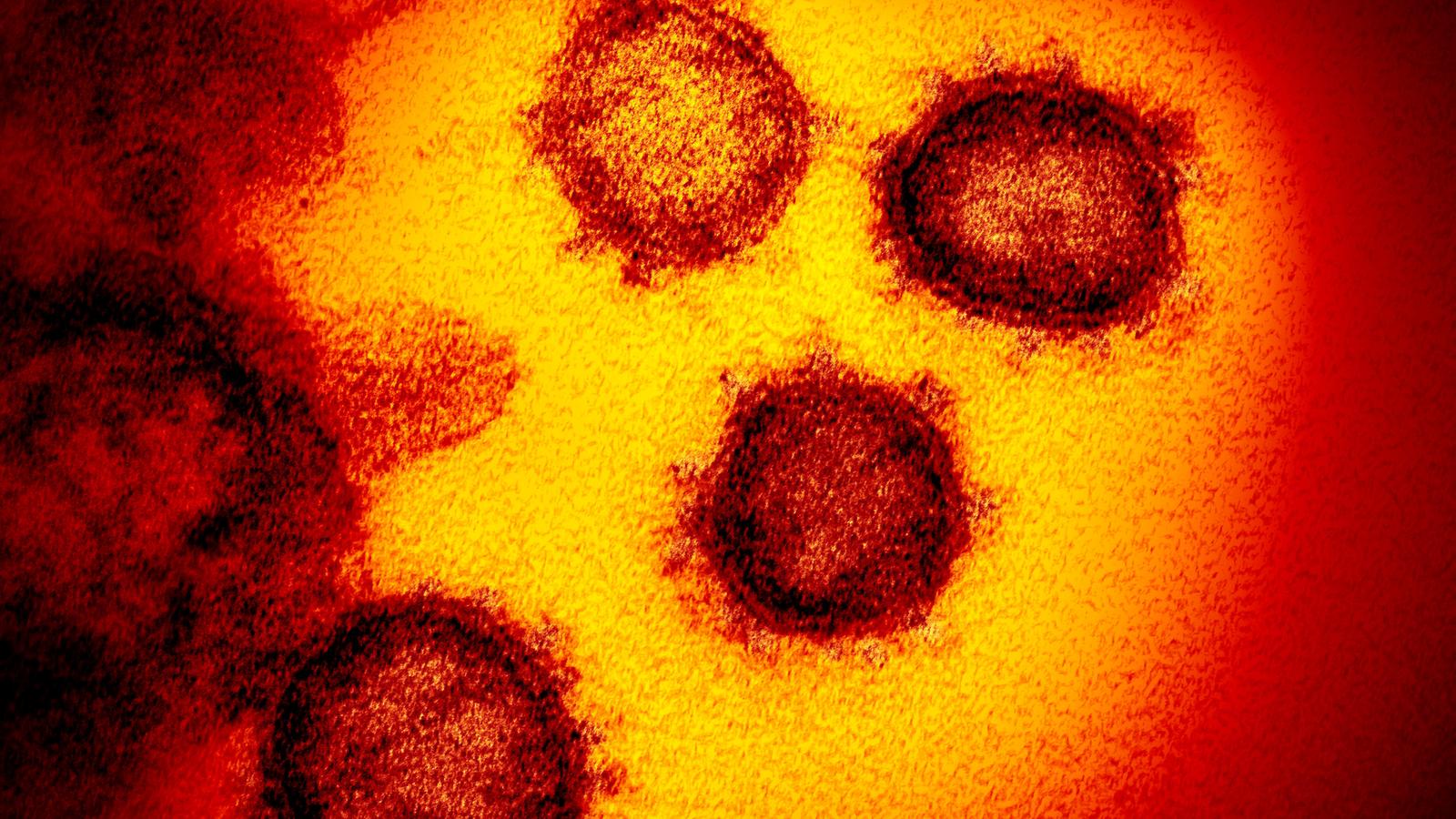
Coronavirus. It got its name because under the microscope it has an aura around it, somewhat resembling how we see the sun through a coronagraph, a special telescope that blocks out the solar disk so that one can study the sun's glowing atmosphere. Corona actually means crown. SARS-CoV-2 is what we call a zoonosis, a pathogen that can infect both animals and humans. It is also considered highly contagious and has a high fatality rate for some of those who become infected.

The world has chosen different strategies to combat this virus, ranging from denying that it exists at all to complete lockdown and isolation. Some countries reacted quickly, some late. Our neighboring country, Sweden, believed that the best approach would be for as many people as possible to get the disease so that natural immunity in the population would occur, the much-discussed herd immunity. That is when so many are immune that those who are infected cannot infect many others, and the infection rate is below one. Then the epidemic will die out. The infection and disease will continue to exist, but not as an epidemic. The infection rate for Norway is currently at 0.66. But that is due to lockdown and isolation measures, not herd immunity. Norway has chosen a strategy of lockdown and isolation. It will not eradicate the disease. It could have done so if it were a limited area. As it stands, the spread is global, and we must assume that even if one were to manage to eradicate the virus in Norway, it would always come back. We simply cannot isolate ourselves from the rest of the world forever.

It will take a very long time for Norway to achieve natural resistance in the population. Due to the strategy we have chosen, few people are infected. To achieve the effect of herd immunity, at least 60% of the population must have antibodies. Nevertheless, I believe Norway has chosen a favorable strategy, provided that a vaccine becomes available within a reasonable time. By vaccinating, immunity is achieved without experiencing the disease.

There is also a big difference in how severely the disease affects each individual. This may be due to some cross-immunity stemming from other illnesses, like flu, colds, etc. Another factor that can play a role is the infectious dose. If a person is exposed to a massive dose of the virus, the body has less chance to fight it compared to if the dose is smaller, allowing the immune system time to respond before a large number of cells are infected. It is also the case that, regardless of the disease, not everyone gets sick. During the Black Death, many fell ill, but not all. The Spanish flu did not affect everyone. Not everyone gets the flu, and not everyone contracted measles, rubella, chickenpox, and so on. Some are naturally immune without any detectable reason.

The pandemic leaves its mark on the economy. When people miss work due to illness or quarantine, it results in losses. We see that many politicians and lobbyists are more concerned about the country's (or their own) economy than about the health of the population. The government is quite generous in handing out saved funds to large, international players while small businesses have to struggle and manage as best they can. Some predict a global recession that will last for decades to come.

The world's wealth is very unevenly distributed. While some wallow in luxury, others are dying of hunger. Could it be time for a revision of our economic systems? We consume the Earth's resources to produce superfluous and unnecessary things. Could it be time to return to the essentials? We travel around the world in search of experiences and entertainment in exotic settings. Could it be time to become a bit more 'introspective' and rather seek amusement in our immediate surroundings? We pull fish from the sea, transport it halfway across the globe to have it processed before sending it back the same way. Could it be time to put an end to such madness? We are so busy that goods are sent by energy-consuming and environmentally damaging trucks instead of by ship or railway.

There are many things that don't add up. Pandemics are certainly not the only problem we are struggling with. Not even the worst.
Energy and movement<

Sometimes, when night falls and the house becomes quiet, thoughts start to wander on their own. Then it can easily happen that curiosity takes complete control and reason, which tells you that it is bedtime, must give way. You examine one thing and along the way discover another thing that needs to be looked into – and so on. Until the night comes to an end and you go about the day in a half-asleep state.

Energy, for example, is something worth thinking about. We are in the process of depleting the Earth's energy resources at an accelerating pace. We have long been aware of this, but we refuse to fully acknowledge it. At least not to a significant degree. Driving electric cars might help a little, but unfortunately it is far too little. We live in a world of denial, along with a firm belief in miracles, that we will be saved when science provides a deus ex machina solution. Unfortunately, this is a phenomenon that belongs in the world of movies and novels. However, it may be that the world is beginning to wake up. If so, it is because of a young woman from Sweden who has made it her mission to awaken the world. Because we need change. Yet at the same time, the idea is associated with fear, for it is likely that these changes will hardly be very comfortable.

But if we let our thoughts spin a little in the night. Have you ever wondered how far a car could drive if it ran on slices of bread – or oats for that matter? Have you ever wondered how much gasoline you would need if we humans could run on gasoline?

Fortunately, the situation is such that we still have enough energy to run the internet. There, one can easily find basic data by doing a quick Google search. First, I looked at the daily energy requirements. From the Norwegian Health Informatics website, I obtained the daily energy requirements for women and men under different conditions, as shown in the table below. The energy requirements were given in kilocalories, a useless unit for calculations, so I immediately converted it to joules (kilojoules) and then to the amount of gasoline that contains the same amount of energy.

OBJECTACTIVITYENERGY
kcal
ENERGY
kilojoule
Gasoline (liter)
Man age 40, height 180 cm, weight 80 kgrest173272510,228
easy work2772<7td>116050,366
activ work2945123300,389
Woman age 40, height 165 cm, weight 60 kgrest1354<7td>56680,178
easy work2166<7td>90680,286
activ work2302<7td>96380,304

As shown by the table, we animals are considerably more efficient than machines. Yes, we are animals too, mammals and warm-blooded. Cold-blooded animals that do not use their energy to maintain body temperature are even more energy-efficient than us, but that can wait for another night. We do have an impressively low consumption – less than half a liter per day. Imagine how much gasoline it would have taken to build the pyramids if all the workers were gasoline-powered?

Then I also visited a website belonging to Ingrid Kristiansen. To reassure people who know me: I don't usually frequent such sites. It was just a one-time occurrence and solely for the purpose of finding information. What I learned on that site is how much energy we use on different activities.

ACTIVITYEnergy/hour
(kcal/h)
Energy/km
(kcal/km)
Energy/km
(kJ/km)
Petrol consumption
(litres/km)
Hiking in flat terrain
5 kilometres per hour
300602510,008
Running 10 km/h660662760,009
Running 15 km/h1080723010,01

Once again, one is amazed at how efficient we are. We also see that the most effective way to move is to walk – not run.

But what if we build an engine that runs on whole-grain bread with yellow cheese (without butter)? How much fuel would that require?

Many cars today consume about half a liter per ten kilometers. But gasoline engines are not particularly efficient. They have an efficiency of 20% (perhaps a little better with new engines, but in this calculation, we use 20%). This means that most of the energy is wasted as heat. Only 0.01 liters go towards moving the car forward one kilometer. That corresponds to an energy of 0.088 kWh, which in turn corresponds to 757 kcal. A slice of whole-grain bread with yellow cheese has an energy content of 152 kcal. This means that this car with a bread engine would need to chew through almost five slices of bread per kilometer. Then one would need to load a significant amount of fuel to drive a trip to Tromsø. Maybe one would also need to bring a stoker to feed this greedy machine. I really think we are going to have to scrap the car as a means of transport.

Comments. I have made it quite difficult to post comments on this page. This is to avoid having to clean out all those who try to sneak in shady links on the site. Comments are welcome via email. (click here) or post on Facebook page mine (opens in a new tab). Let's just hope that no major calculation errors have crept in!

About bees and men

When it says men in the headline, it means men in the sense of humanity in general, and not at all male beings of the human species. Otherwise, one might think that I mean the following considerations do not apply to female beings. But they do. The fact is that it sounds much better when one says 'about bees and men' than when one says 'bees and humans.' And besides, it's not just bees we're talking about here, it's also ants, termites, and other creatures that live in the same way.

Bees live in colonies. In beehives when they are 'tame' or in hollow tree trunks or wherever else they find it suitable to exist. A bee can hardly be said to possess much intelligence. From birth, it is intended for specific tasks. Some are guards and ensure that intruders do not enter. Some take care of the young and feed them, some act as living ventilation systems and fan air through the hive when it is hot, or just vibrate their wings to generate heat when it is cold. Some go out to collect honey and pollen. Some are heaters for the queen. The queen, yes. The queen eats and gives birth. That is what queen bees do. And then she controls the other bees by emitting scents.

When looking at bees individually, one can probably detect a certain intelligence. However, most of their behavior is genetically programmed and dictated by the demands of the colony or the queen. One could say they are hardwired and remotely controlled. It is different when looking at the colony as a whole, as a single organism. In a bee colony, most, often all, worker bees are daughters of the queen. Like cells in the body, they are centrally controlled by chemical stimuli. In the body, these are called hormones, but in bees, we call them pheromones. Just like brain cells communicate with each other through synapses, bees also communicate with each other. Brain cells exchange information through chemicals and electrical signals, bees exchange information with each other through scents and through dancing and tail-wagging. When a bee returns home with full loads of nectar, it performs a small dance, and with the direction of the dance and a slight wag of its tail, it tells the other bees which way to go to find good nectar. One might argue that the intelligence of the colony is greater than the sum of its individual members.

Humans may be the animal on Earth with the highest individual intelligence. We do not know for sure; we just believe it. For we have no real way to measure intelligence. It is true, however, that some claim that human intelligence was at its peak around 10,000 years ago and that it is now declining. Sometimes it can be easy to believe that. But what is more important is that humanity as a whole does not act intelligently. We prefer to use our abilities to acquire goods at the expense of others. In the extreme, we kill to live the good life as we wish. We do this surprisingly easily. In fact, we are often willing to go to war and kill simply because someone believes in different stories than we do. We are not capable of using our collective intelligence, if it exists, for the benefit of all humanity. Just look at the issue of climate change. We have long known that our extraction of the Earth's energy resources is not sustainable.

Throughout Earth's history, there have been several mass extinctions. Some global, some more local. A common factor for most of them is that they have been linked to climate change. Insects have had their heyday on Earth. So have reptiles and mammals. Which group is next in line? Is it the insects again? Perhaps the mollusks? Could we witness intelligent shells and literary snails? Philosophical octopuses. Octopuses are already considered highly intelligent, despite lacking a central nervous system. Or is it the machines that will take over? This was a popular theme in the Science Fiction genre in the 1960s and 70s. A superorganism of interconnected computers that secured dominion over the world and kept humans as slaves. Theoretically, this is not impossible. It might even have already happened. For aren't we, to a large extent, good slaves to our machines? Many of us are lost and dysfunctional and fall into a vegetative state the moment the phone is out of battery. If we are to have even the slightest hope of surviving, we must strive to develop a collective intelligence. We simply must become more like the bees.

It may seem as if collective and individual intelligence are in opposition to each other. If one looks at political systems, capitalism is probably the one that best fits high individual intelligence. Everyone can work to acquire benefits. There is minimal regulation and restrictions. It is good for the intelligent and the ruthless, but it is not good for humanity. To avoid stagnation, such a system is based on continuous growth. It becomes like a pyramid scheme. Some profit, but many lose when it collapses. The other extreme is communism. A centrally controlled regime where everyone works according to a plan that is for the benefit of all. In principle, that doesn't sound so bad, but there are problems. Who should decide the plan? How should the consideration for individual people be ensured? What if someone disagrees with the plan and refuses to follow it? We have also seen the phenomenon that power corrupts. The person or people who were supposed to decide and administer such a plan would have infinite power! Socialism is in many ways a middle ground between these. There is a majority that makes the plans and administers them. Limitations are placed on the individual, but there is still considerable freedom. This system is not without problems either. When the Athenians talked about democracy, they meant real democracy. Everyone showed up and discussed the matter, and decisions were made about what should be done. For practical reasons, this is no longer possible. We elect representatives to make decisions on our behalf. But are we sure that these representatives truly represent those who elected them? Are we sure that the representatives are informed enough to make the right choices? And not least, are we informed enough to choose the right representatives? This becomes difficult. Perhaps we need a supercomputer to take over?

All of this can also be viewed on a larger scale. Nations, not individuals. As long as all nations are only concerned with improving their own conditions, usually at the expense of someone else's, it is contrary to the common good of humanity. In reality, we do not have much hope. If only we were a bee. With a completely different view of existence and not least a different perspective on eternity.

But maybe there is still a small glimmer of hope? A Swedish little girl who manages to make the world listen? Let's hope so. Because there is one thing we humans are very good at, and that is hoping!

New webcam

Finally, a new webcam is up and running. This is a so-called 'bullet' camera. It has an outer casing that can withstand weather and wind. The previous one didn't have that; it was a camera intended for indoor use. It was also mounted inside the garage, but I had made a hole in the garage wall so it could look through. This, of course, also limited the field of view somewhat.
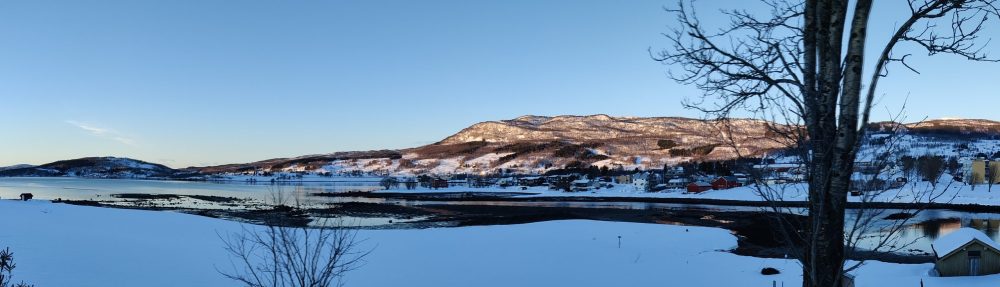
This camera is mounted outside, up on the wall, and has a much better view. That is to say, I need to adjust it upwards so that it shows a little more of the sky. I will do that next time I pass by. The camera faces Furøy and Gottesjord. It will be nice in the spring when the sun comes back and shines on the hills of Gottesjord.
Now it is dark for much of the day, and then there is not much to see, except for the lights on the other side. The camera has IR illumination to light up the foreground. The only problem is that there is no foreground. I have still left the IR illumination on because it makes it easy to see if there is precipitation even in the dark. If there are white streaks across the image, then it is raining or snowing. If the streaks are horizontal, then there is also wind.
The camera takes pictures every 10 minutes. It can take up to 5 minutes from when the picture is taken until it is uploaded. The pictures are sent to Weather Underground, where you can see previous images, and you can view a time-lapse video for each day.
Here is the webcam directly
Here is videos and more
The images from my webcam are free for anyone to use for any legitimate purposes. If they are used, I would appreciate it if a small source reference is included.
Have fun!

-But how long was Adam in paradise? The camera stopped working after a few days. Maybe it can't handle frost. Very annoying, but I guess that's what happens when you buy cheap from Wish. To be continued . . .

Encrypted connection

A SSL certificate has now been added to my site. It just means that the connection is encrypted, so no one can intercept what is sent between the server and the recipient. It's actually a bit unnecessary on a site like this, but a certificate at this level is free from my ISP. That way, you don't get a message that the connection is insecure. And best of all, you get a cool, green padlock in the address bar. Fancy!

Election

Once again, it is time for the quadrennial ceremony that is meant to legitimize the existence of Parliament politicians. It is election time – a time to hold them accountable for the disasters they have brought upon the Norwegian people and the world at large. Unfortunately, it seems that politicians are increasingly more concerned with power and positions as phenomena, rather than as a means to serve those they represent. This, in turn, contributes to the phenomenon that fewer and fewer people find it worthwhile to cast their vote. It is also not so easy to sift through all the election noise and figure out what one can realistically expect from the various parties. It is mostly about choosing the lesser of the available evils.

Sometimes we just want change. Something different from what has been. It doesn't always go so well. Just look at the USA. They clearly wanted something different. The rest of us hold our breath and hope the world survives. Although we probably don’t have much to be proud of ourselves either. A Bergen sand-sprinkler who is busy spreading sand where her stray dogs have been and peed, or done something worse.

I think this government has been a disaster. Not when it comes to the economy or living conditions. Such things are now mostly independent of the politicians. When things go well, it is usually in spite of – and not because of the politicians. And when things do not go well, those same politicians have very little to contribute. It is always the ordinary people who have to fork out and pay the bill anyway. No, the disaster is that they have made it so that one feels ashamed to have to say that one is Norwegian. They talk about values, but discard all ideals that exist, both Norwegian and international.

We do not have democracy in Norway. There is hardly any country in the world that can boast of having true democracy. The city-states in ancient Greece had it. True democracy can hardly be scaled up to work for an entire country. Instead, we have something called representative democracy.

We choose those who will be our representatives. Let us choose worthy representatives, representatives we can identify with. The very least is that they must have a minimum of common decency.

But most importantly: Make a choice!

Godt valg


Flags in the 17 May parade

© Hans-Petter Fjeld, some rights reserved.

The other day I saw on Facebook some kind of poll regarding the 17th of May parade. In it, people were encouraged to express whether they think it is acceptable for flags other than the Norwegian one to be carried. It has, after all, become very relevant with an increasing number of people of foreign origin, both those who migrate to Norway and those seeking protection from war and persecution.
Many said NO – there should only be Norwegian flags in the parade. I don't think they have really thought it through. Because May 17th is Norway's national day. The day we celebrate the Constitution and the principles enshrined in it. The Constitution is the sum of Norway's history. The enterprising farmers, the weather-beaten fishermen and hunters, the adventurous Vikings, and all the hardworking people who extracted ore from the mountains. Norwegians have always loved freedom, but have also seen the necessity of having laws and rules to follow. "At lögum skal land várt byggja en eigi at ulögum øyða," said the old Frostating law, meaning, 'With law shall the land be built, and not with lawlessness destroyed.' Already in the 11th century, laws were important. And there is one thing worth noting: The old Norwegians did not go to King Solomon to have him judge their disputes; they took their cases to the assemblies (tings) and had them resolved there.
Our Constitution is not perfect. But it is the best we have, and I believe it is among the best in the world, so it is well worth celebrating. And celebrate we shall – but we must not "be self-sufficient." Norway is not a distant planet floating in an impenetrable void. Norway is, for better or worse, in the world.
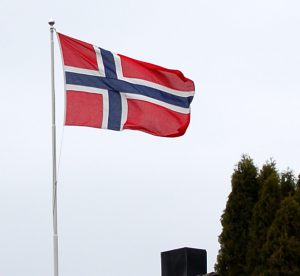
Marching in the May 17th parade is how we show our Norwegian identity. We do not have military parades displaying weapons. We march in processions, sing, shout hurrah, and wave flags. And there are many different flags in the May 17th parade. Each school, each kindergarten, each band, each stand, each guild has its own banner under which they march. Everyone shows their identity, united under the Norwegian flag. There is, after all, no fundamental difference between a banner and a flag. Both are symbols of belonging. Of course, the Norwegian flag holds a special position, especially on May 17th. Those who are in Norway for various reasons, whether as guests, for work, or seeking protection, and who wish to participate in the celebration, should we demand that they erase their identity? Sail under a false flag, so to speak.
A ship sailing in the waters of another country flies its own country's flag and the flag of the country it is visiting. Flying its own flag is a symbol that shows identity, indicating where it comes from. The flag of the country it is visiting symbolizes that it is on a peaceful and legal voyage and has no ill intentions. In the same way, we can also look at different flags on National Day.
A flag from another country will not diminish the Norwegian one. On the contrary, it shows that Norway is a good and safe country where it is good to live. We should be happy that others want to celebrate with us, and that they want to show who they are.

Of course, it is now up to each individual which flag they want to carry, but as I said, I would find it natural to carry both flags for those who wish to do so.

The Christmas gift of Mars

Will the world last until Easter? Maybe, maybe not – stranger things have happened before. And besides, it’s not that long until Easter anyway. Besides, time is an oval thing, I’ve heard. The axes aren’t equal. Maybe that’s why the seasons jump around a bit. Just when summer is about to begin, there’s the worst snowstorm in a long time. Also, it’s usually considered commendable to be early. But the thing is, today I actually received the first Christmas present of the year! Yes, indeed. A Christmas present. And she was quite cheerful, the one who brought it and declared it to be an early Christmas gift.

It so happens that I easily develop a very close and personal relationship with my footwear. And good friends who have stuck with you through thick and thin, wet and dry, are not easily parted with. At least, one must try to gradually get used to the loss. A couple of times it has happened that I have been at the dumpster and rescued old, faithful friends – amid strong criticism and threats in harsh words, of house bans and worse.

But sometimes it's just over. When sudden sinkholes and persistent cracks appear in the millimeter-thin layer that is supposed to protect the soles of the feet from everything that could possibly trouble an unprotected foot, it's time to resign and let the garbage truck take what belongs to the garbage truck. Because I am a strong advocate of the universal use of moccasins – both fish entrails and party they must endure. And they do, but not forever.

Now, it's not as if I am currently wearing worn-out shoes. No, they still have good durability left. The problem is slippers. I have a pair of indoor slippers. The kind you can shuffle around the living room floor in. And they are probably not exactly new. Do you remember the old Kandahar ski bindings? The ones that had a little clip over the toe, and then a spring that tightened around the heel and held the boot in place in the bindings. If you ignore the spring, imagine the clip replaced by some thin woolen material, and then imagine something loose from the ski dangling around, partly under and partly behind the foot, that’s roughly how the old slippers look. But actually, there's nothing wrong with them. They’re not that old either, and they’re warm and comfortable. But then there are people who have set their eyes on them and decided that it’s advisable to replace perfectly functional foot warmers. Well, I’ll probably get over it eventually. Maybe. But then you also need to have a strategy ready for when the nights get long and the cold sets in. For Christmas presents in March – that is completely unacceptable, rude, and utterly reprehensible. Namely.

Now it's just a matter of finding a discreet – very discreet – place for the old slippers to hidewhen I take them off. They are just too good to go through every slipper's final journey to the eternal carpet floors. And then there's the fitting and adaption. It's particularly important to get the heel cup properly adapted for quick on and off.

World Water Day

World Water Day is on March 22. This year, the focus is on used water and what we can get out of it. Because we preferably like our water cold, clear, and clean. Once we have used the water, it no longer meets these requirements. Then we usually want to get rid of it as quickly as possible. But in fact, it is this used water that is the valuable water. We do not want to drink it or wash in it, that's true. It is not very appealing to look at, that's true. But it contains a lot of nutrients that we just flush away. So many nutrients, in fact, that it creates problems where it ends up. The ocean is unique when it comes to receiving nutrients. Because there is enormous production in the sea, and it needs lots of nutrients. We are used to the ocean absorbing everything it gets. But even here, it can be too much. Some of us may remember the algal blooms at the end of the 1980s. It was the dinoflagellate Chrysochromulina polylepis, which first bloomed along the west coast of Sweden and then followed the currents along the coast of Norway. It killed or damaged almost everything in its path, including fish, shellfish, and algae (seaweed and kelp). The bloom was due to overly nutrient-rich water, favorable temperatures, and other conditions being conducive to a massive bloom. There have also been several such blooms of different types of algae, but none with such extensive damage. In Northern Norway, we are more sparsely distributed, and there are fewer of us, so we are not as exposed. But even here, it is important to limit the discharge of nutrients.
Freshwater does not have as high production as seawater. Neither are mechanisms like tides, changing currents, and wave dynamics present, at least not to the same extent as in seawater. Therefore, freshwater is much more sensitive to nutrients than seawater. Especially phosphates lead to eutrophication in freshwater. In the area around Mjøsa, almost only phosphate-free detergents are used, which, together with other measures, have had dramatic effects on the water quality in the lake.
It is important to take care of water quality, both in rivers, lakes, and especially in the sea. If there are too many nutrients, eutrophication occurs, leading to overgrowth in the water, which becomes brown and murky, and dead plants and animals sink to the bottom. In the bottom sediments, bacteria break down the dead material. These bacteria consume the oxygen in the water. In the bottom sediments themselves, anaerobic decomposition processes take place. The result of these processes includes hydrogen sulfide, a toxic gas that smells like rotten eggs. The water becomes toxic and oxygen-deprived.
The same can happen in the sea as well. In fact, it is normal in threshold fjords where there is no exchange of bottom water beyond the threshold. Organic material sinks down and forms bottom sludge. This decomposes without oxygen and makes the water toxic. Occasionally, such water can be stirred up and come up from the depths, causing fish deaths. The discharge of nutrients from sewage and runoff from agriculture can pollute large sea areas and disrupt the natural growth cycles in the ocean. This can lead to algal blooms and oxygen depletion.
There are several ways to treat wastewater. The simplest is to let it flow into a tank so that the solid substances settle and form a layer at the bottom. The water then continues and infiltrates into the ground. This is how a septic tank works. That system works in sparsely populated areas. In more densely populated areas, a communal treatment plant is made. This means collecting the wastewater from several houses and treating it in a shared facility. Then it is also possible to further increase the level of sedimentation by adding a substance that causes the smallest particles to clump together so that they settle more easily. This can be combined with mechanical filtration. Sand filters are effective, but they take up a lot of space and require much work to clean. One method that produces almost completely clean water is to let the water trickle over bio-bodies, plastic units with a large surface area, while air is blown through the system. This creates a bacterial layer, a biofilm, on the surface of these units. This bacterial layer consumes the nutrients. Any pathogens are also consumed and deactivated. The bacterial layer on the bio-balls grows and must be removed periodically. Then, the bio-balls become ineffective until they develop a new bacterial layer. Therefore, this is usually done as a continuous process where a certain number of bio-balls are cleaned at any given time while the remaining ones continue to perform their function. The material removed from the bio-balls is a good fertilizer and soil improvement product. The same applies to sludge from sand filters and septic sludge, though following a maturation process in which bacteria and yeast break down nutrients and harmful bacteria.
Water is important! It is our most important nutrient. We cannot live without water. No animal can. Even camels and dromedaries, which can convert the fat stored in their humps into water, have to drink. And they drink a lot when they do. Some animals get all the water they need from the food they eat, but if they don’t get the water, they die. The sea is important. A large part of our food comes from the sea. As the world’s population demands more food, it is probably only the sea that has the capacity to provide this food. Moreover, a large part of the oxygen that life on Earth needs is produced in the sea.
Tank på havet. Tenk på vann.

Where does the used water go?

We get clean, fresh water into our homes. First-class drinking water. The water we release is not quite as clean. We have used it to wash ourselves, to wash cups, clothes, walls, and floors. We have urinated in it and done other things in it. In short, the water we send away from us is not very clean. We usually don’t think much about it. We just pull the lever when washing, or pull the cord – well, nowadays toilets have a button, not a cord – okay, we press the button and whoosh – it’s gone. Before the time of water closets, there was the era of outhouses. Outhouses and dung heaps are fine as long as they’re not too close together. In towns where people lived close together, and all waste had to flow along the streets or in the gutters, it could be quite unpleasant to walk. By the way, the word 'dass' is of German origin. It is a euphemism for a euphemism, namely for 'das Raum' – the room, for an even worse designation for premises for bodily functions.

The ancient Romans were a clean people. They had a decent system. There were public toilets where one sat on a stone bench with holes in it, and the waste would fall into a channel and be carried away by a stream of water. There was also a number of sponges available, conveniently mounted on a stick, which one could use to clean oneself in the rear areas. Then you would just rinse it in the water stream and prepare it for the next “guest.” Practical and hygienic.

The upper class in Europe, at least the top part of the upper class, had toilet chairs – chairs with a built-in chamber pot to catch the noble excrement. The most advanced chamber pots even had built-in butt wipers. It was actually considered a prestigious job to be a royal butt wiper. Among the common people, the conditions were probably more Spartan. But regardless of the type of toilet used, the waste ended up in the street. And it was hardly pleasant to step in, no matter how royal it might be. Some of the waste perhaps went into a river or a canal and was carried away, but that same river was also drinking water for others. Runoff could also seep into wells and other water sources. Eventually, it became quite intolerable. People started to build sewers and water pipes. In London, in the 1850s, 2,100 kilometers of water and sewer pipes were constructed. This led to a dramatic decrease in mortality. Cholera and other diseases almost disappeared.

The importance of a well-functioning sewage system is obvious. Many, especially in sparsely populated areas, have septic tanks. It is a small treatment plant in miniature. It is a tank with several chambers where solid materials are allowed to settle, and there is also a composting process of the waste. So the solids settle at the bottom, and the water is directed into an infiltration pipe, where it is purified by seeping into the soil. The tank must be emptied at regular intervals, and the settled solids are transported to a landfill. In denser settlements, there is usually a public sewer system. The sewage is transported away through pipelines. If the terrain slopes, it is quite simple. Then you just lay a pipe, and the water flows downward on its own. But often there are obstacles, uphill sections. Then you may need pumps to get the sewage where you want it. Here in Sørreisa, we have a total of 11 stations that pump sewage. Each station has a sump with two pumps. They alternate in operation, one at a time. If the level rises in the swamp, when a single pump can no longer keep it at bay, both start.


But where should we then put the waste? It is infectious and unappetizing, and it smells bad. Should we release it into the sea? A fjord into which wastewater is discharged is called a recipient—a receiver. One can then calculate how much discharge a recipient can tolerate before it starts to become polluted. This depends on several factors. Weather, waves, and currents are very important. We no longer release untreated sewage into the recipients. Nevertheless, some dry matter remains, depending on the degree of treatment. Calculations are made of the amount of dry matter, and a discharge permit is issued. Measurements and analyses are usually conducted to document that the calculations are correct and that the treatment works as it should.

Wastewater treatment can be done in several ways and to varying degrees, depending on how sensitive the receiving environment is. One method is to release the wastewater into a tank and allow the solids to settle to the bottom. Then, relatively clean water can be skimmed from the surface and released. Alternatively, chemicals can be added so that small particles suspended in the water stick together and become large enough to sink. The water that comes out will then be quite clear. But further treatment is possible. For example, water can be trickled over bio-bodies. These are plastic structures designed to have a large surface area that also has good access to air. The surface of these structures will eventually be covered by a biofilm, a layer of microorganisms that consume the pollutants in the water. Periodically, some of these structures are removed and cleaned of biofilm. They then re-enter the process and build a new layer…

This is how one can continue to purify water until it can be used as drinking water again. But we rarely do this in Norway. We usually have new water to use for that. However, the collected substances, including washed-off biofilm, sludge from septic tanks, sediment from municipal sludge separators, and sludge from treatment plants, are transported away and either deposited or further processed until they can be used as fertilizer or soil conditioner.

For both private and public sewage systems, it is important to ensure that drainage water does not enter the sewer. This creates challenges for capacity, both in the pipelines and any pumps, and it can cause sewage to flow back into houses during flood conditions.

In Sørreisa, many people have private sewage systems with septic tanks. Additionally, we have some public sewage systems with sludge separators. Then we have two treatment plants, one where the wastewater is allowed to settle in a tank, and then the sludge is flushed into a storage tank. The water is decanted, skimmed off, and released into the sea. In the other, chemicals are added to increase sedimentation, but here the decanted water is released into freshwater. Therefore, a higher level of treatment is required.

Maintenance of sewage systems is demanding. The system has been developed over a long period, and different materials have been used. Sometimes, ground settling causes the pipes to separate, leak, or get crushed and blocked. Where there are concrete pipes or other pipes with joints without seals, it is a favored spot for various plants to send in their roots to absorb high-quality nutrients. Paper and other debris then tend to get caught in these roots, and the pipes can become blocked. Such pipes must be replaced or cleaned. Sometimes we need to insert a camera into the pipe to find out what is wrong. Pump stations and pumps must be maintained and overhauled at regular intervals.

Overall, there are many things to be mindful of and many processes at work. Think about this a little every time you flush the toilet. And remember: do not empty the mop bucket into the toilet. Clumps and mops are the worst things that can get into our pumps. This leads to having to lift the pump, disassemble and clean it, and then lower it again. Sometimes such things can damage the pump's seal and result in costly repairs. Wet wipes are also something we dislike. They are made of fibers that do not dissolve in water, can get caught, cause clogged pipes, and may damage the pumps by getting between the impeller and the seal.