We get clean, fresh water into our homes. First-class drinking water. The water we release is not quite as clean. We have used it to wash ourselves, to wash cups, clothes, walls, and floors. We have urinated in it and done other things in it. In short, the water we send away from us is not very clean. We usually don’t think much about it. We just pull the lever when washing, or pull the cord – well, nowadays toilets have a button, not a cord – okay, we press the button and whoosh – it’s gone. Before the time of water closets, there was the era of outhouses. Outhouses and dung heaps are fine as long as they’re not too close together. In towns where people lived close together, and all waste had to flow along the streets or in the gutters, it could be quite unpleasant to walk. By the way, the word 'dass' is of German origin. It is a euphemism for a euphemism, namely for 'das Raum' – the room, for an even worse designation for premises for bodily functions.
The ancient Romans were a clean people. They had a decent system. There were public toilets where one sat on a stone bench with holes in it, and the waste would fall into a channel and be carried away by a stream of water. There was also a number of sponges available, conveniently mounted on a stick, which one could use to clean oneself in the rear areas. Then you would just rinse it in the water stream and prepare it for the next “guest.” Practical and hygienic.
The upper class in Europe, at least the top part of the upper class, had toilet chairs – chairs with a built-in chamber pot to catch the noble excrement. The most advanced chamber pots even had built-in butt wipers. It was actually considered a prestigious job to be a royal butt wiper. Among the common people, the conditions were probably more Spartan. But regardless of the type of toilet used, the waste ended up in the street. And it was hardly pleasant to step in, no matter how royal it might be. Some of the waste perhaps went into a river or a canal and was carried away, but that same river was also drinking water for others. Runoff could also seep into wells and other water sources. Eventually, it became quite intolerable. People started to build sewers and water pipes. In London, in the 1850s, 2,100 kilometers of water and sewer pipes were constructed. This led to a dramatic decrease in mortality. Cholera and other diseases almost disappeared.
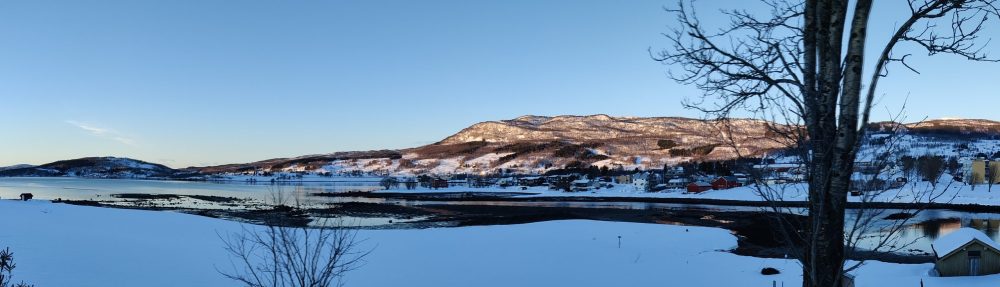
The importance of a well-functioning sewage system is obvious. Many, especially in sparsely populated areas, have septic tanks. It is a small treatment plant in miniature. It is a tank with several chambers where solid materials are allowed to settle, and there is also a composting process of the waste. So the solids settle at the bottom, and the water is directed into an infiltration pipe, where it is purified by seeping into the soil. The tank must be emptied at regular intervals, and the settled solids are transported to a landfill. In denser settlements, there is usually a public sewer system. The sewage is transported away through pipelines. If the terrain slopes, it is quite simple. Then you just lay a pipe, and the water flows downward on its own. But often there are obstacles, uphill sections. Then you may need pumps to get the sewage where you want it. Here in Sørreisa, we have a total of 11 stations that pump sewage. Each station has a sump with two pumps. They alternate in operation, one at a time. If the level rises in the swamp, when a single pump can no longer keep it at bay, both start.
But where should we then put the waste? It is infectious and unappetizing, and it smells bad. Should we release it into the sea? A fjord into which wastewater is discharged is called a recipient—a receiver. One can then calculate how much discharge a recipient can tolerate before it starts to become polluted. This depends on several factors. Weather, waves, and currents are very important. We no longer release untreated sewage into the recipients. Nevertheless, some dry matter remains, depending on the degree of treatment. Calculations are made of the amount of dry matter, and a discharge permit is issued. Measurements and analyses are usually conducted to document that the calculations are correct and that the treatment works as it should.
Wastewater treatment can be done in several ways and to varying degrees, depending on how sensitive the receiving environment is. One method is to release the wastewater into a tank and allow the solids to settle to the bottom. Then, relatively clean water can be skimmed from the surface and released. Alternatively, chemicals can be added so that small particles suspended in the water stick together and become large enough to sink. The water that comes out will then be quite clear. But further treatment is possible. For example, water can be trickled over bio-bodies. These are plastic structures designed to have a large surface area that also has good access to air. The surface of these structures will eventually be covered by a biofilm, a layer of microorganisms that consume the pollutants in the water. Periodically, some of these structures are removed and cleaned of biofilm. They then re-enter the process and build a new layer…
This is how one can continue to purify water until it can be used as drinking water again. But we rarely do this in Norway. We usually have new water to use for that. However, the collected substances, including washed-off biofilm, sludge from septic tanks, sediment from municipal sludge separators, and sludge from treatment plants, are transported away and either deposited or further processed until they can be used as fertilizer or soil conditioner.
For both private and public sewage systems, it is important to ensure that drainage water does not enter the sewer. This creates challenges for capacity, both in the pipelines and any pumps, and it can cause sewage to flow back into houses during flood conditions.
In Sørreisa, many people have private sewage systems with septic tanks. Additionally, we have some public sewage systems with sludge separators. Then we have two treatment plants, one where the wastewater is allowed to settle in a tank, and then the sludge is flushed into a storage tank. The water is decanted, skimmed off, and released into the sea. In the other, chemicals are added to increase sedimentation, but here the decanted water is released into freshwater. Therefore, a higher level of treatment is required.
Maintenance of sewage systems is demanding. The system has been developed over a long period, and different materials have been used. Sometimes, ground settling causes the pipes to separate, leak, or get crushed and blocked. Where there are concrete pipes or other pipes with joints without seals, it is a favored spot for various plants to send in their roots to absorb high-quality nutrients. Paper and other debris then tend to get caught in these roots, and the pipes can become blocked. Such pipes must be replaced or cleaned. Sometimes we need to insert a camera into the pipe to find out what is wrong. Pump stations and pumps must be maintained and overhauled at regular intervals.
Overall, there are many things to be mindful of and many processes at work. Think about this a little every time you flush the toilet. And remember: do not empty the mop bucket into the toilet. Clumps and mops are the worst things that can get into our pumps. This leads to having to lift the pump, disassemble and clean it, and then lower it again. Sometimes such things can damage the pump's seal and result in costly repairs. Wet wipes are also something we dislike. They are made of fibers that do not dissolve in water, can get caught, cause clogged pipes, and may damage the pumps by getting between the impeller and the seal.